The 20-Second Trick For Lab Grown Diamonds
Table of ContentsThe Greatest Guide To Lab Grown DiamondsLab Grown Diamonds Fundamentals ExplainedFascination About Lab Grown DiamondsNot known Incorrect Statements About Lab Grown Diamonds
As you travel closer to the Planet's core, pressure and temperature level boost, which creates the perfect oven for carbon to be transformed into ruby (diamonds are the only gemstone to be made from purely one component). With an enormous volcanic eruption, these rubies were moved to the Planet's surface area. It's estimated this procedure was rather quick (more than likely throughout a number of hours), which allowed the rubies to stay undamaged without melting.The brief solution: carat weights measure the mass of rocks, karats determine the pureness of gold. Carat: 1 carat weight amounts to 0.2 grams, concerning the weight of a paperclip (following time you see an image of Mariah Carey's 35 carat weight involvement ring, simply picture the concern of carrying 35 paper clips around your finger each day).
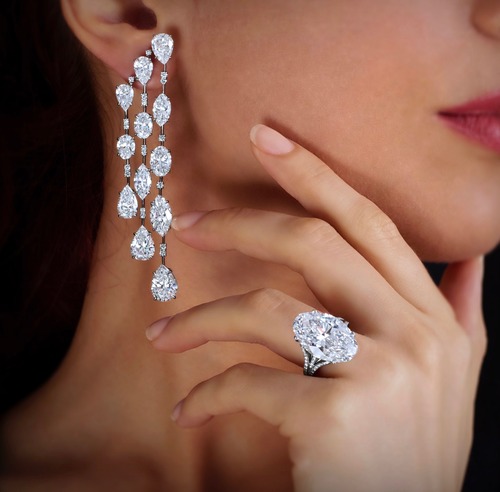
Here are a few of the key advantages of laboratory grown rubies and lab produced diamond jewellery:.
The Best Guide To Lab Grown Diamonds
Place simply, all-natural or earth-mined rubies are crafted over numerous years under the Planet's crust from pure carbon incorporated with stress and warmth. Developing rubies in a laboratory requires the very same procedure, just fine-tuned to take area over a much smaller timespan in a far more controlled setup.
Whereas earth-mined diamonds are unusual and limited and have a tendency to raise in price gradually, laboratory rubies are easily offered. As demand rises, laboratories can remain to create lab diamonds suggesting they are not limited or limited contrasted to natural diamonds. If you have an interest in fine jewelry from an investment point ofview, like lab-grown ruby rings, they won't be a great fit for your needs.
They might believe that the disadvantages of lab-grown rubies outweigh the pros. Some could argue that, for this reason, acquiring a lab-made diamond additionally comes with its honest factors to consider, as doing so takes revenue away from those included in the all-natural diamond sector who might need it most.
Conventional rubies rely upon the Earth's problems to determine their high quality or absence thereof. However in a lab, makers can straight control a diamond's quality. Yes, there are moral and environmental factors to consider with both extracted and manufactured diamonds. Expect your budget plan just enables you to purchase certain shades or cuts of natural diamonds.
The Best Strategy To Use For Lab Grown Diamonds
You can easily find tinted, manufactured diamonds on the (relatively) cheap side as well as details cuts that would be costlier if you were shopping for a mined diamond only. That hardly means it isn't worth safeguarding.
natural diamonds is that the last is mined from natural deposits in the Planet while the former is made in a laboratory utilizing regulated settings. Their top quality is mostly the very same. While the difference in between lab-grown and natural diamond choices are marginal when it pertains to top quality, some of the disadvantages of lab-grown rubies include the truth that the rock will certainly depreciate over time and, to some, an absence of emotional value that's often connected with extracted diamonds
The procedure includes minimal land disturbance and gets rid of problems associated with deforestation and habitat damage. Lab-grown diamonds are frequently extra budget-friendly than all-natural rubies. This cost distinction can be credited to the structured manufacturing procedure and the evasion of expenses linked with typical mining. The Controlled Setting in Which Laboratory Grown Diamonds Are Developed Permits Consistent High Quality.
Flexibility in Layout - Laboratory Grown Diamonds Offer Developers and Customers a Versatile Scheme to Produce Special and Cutting-edge website Jewelry Designs. the Controlled Development Refine Permits The Manufacturing of Diamonds in Various Shapes and Dimensions. Lab Diamond Bands are one of the most Famous Among Laboratory Ruby Precious Jewelry. Lab Diamonds Often Come with A More Transparent Supply Chain.
What Does Lab Grown Diamonds Do?
Market Perception - Regardless Of Their Similar Physical Qualities, Lab Diamonds Might Face Tests in Market Assumption. Some Consumers Still Perceive Natural Diamonds as Having Higher Worth and Status. The Production of Lab-Grown Diamonds Can Be Energy-Intensive, Particularly in Methods Like High Pressure High Temperature level (hpht) and Chemical Vapor Deposition (cvd).
All-natural Rubies Are Formed Over Countless Years Deep Within the Planet, Contributing to Their Perceived Rarity. Lab-Grown Rubies, Regardless Of Their Similar Characteristic, Might Not Carry the Very Same Rarity Variable, Affecting Their Viewed Worth for Some Customers. Effect On Diamond-Dependent Economic Climates - the Change In The Direction Of Laboratory Grown Diamonds Might Have Economic Implications for Nations and Neighborhoods that Depend Upon The Ruby Mining Market.
Ans. Laboratory Diamonds Are of Equal High Quality to Natural Diamonds in Regards To Hardness, Luster, and Quality. the Quality of A Diamond, Whether Lab-Grown or Mined, Is Determined by Its Cut, Shade, Clarity, and Carat Weight Weight. Ans. Yes, Laboratory Diamonds Sparkle Much Like All-natural Diamonds. Their Luster and Glimmer Are an Outcome of Their Cut and The Way Light Communicates with Their Elements. Ans.